
Table of Content
2. Introduction
3. What is Bone Marrow
4. What is Bone Marrow Transplant
5. Why is Bone Marrow Transplant needed
6. Types of Bone Marrow Transplant
7. Preparation for a Bone Marrow Transplant
8. Bone Marrow Transplant Procedure: Step by Step
9. Bone Marrow Transplant Techniques
10. How are the donor and recipient matched?
11. Who Is Eligible for Bone Marrow Transplant
12. Risks and Complications
13. Bone Marrow Transplant in India
14. How to Choose the Best Hospital in India
15. Cost of Bone Marrow Transplant in India (2026)
16. Latest Advances in Bone Marrow Transplant in 2026
17. Conclusion
18. Faqs
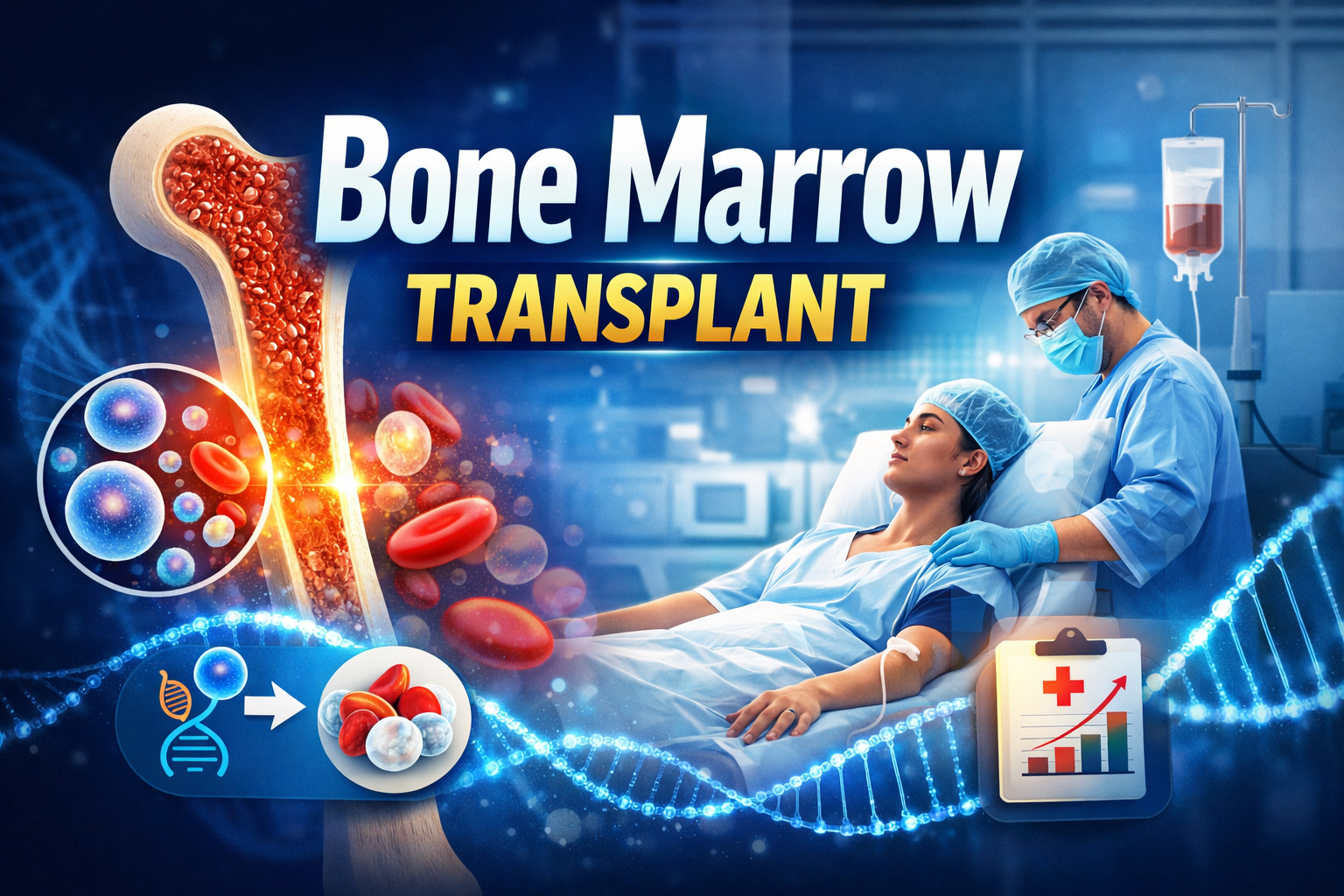
Bone Marrow Transplant: Latest Advances, Cost, and Success Rates in India in 2026
A bone marrow transplant is a life-saving medical procedure that has transformed the treatment of many serious blood disorders and cancers. With the advancement in medical technologies, bone marrow transplant in 2026 is safer, more effective, and more accessible—especially in India, which has emerged as a global hub for advanced transplant care with better cutting edge research technologies and state of the art facilities.
Introduction
Bone marrow transplant (BMT), also called stem cell transplant, plays a crucial role in treating life-threatening diseases such as leukemia, lymphoma, multiple myeloma, and aplastic anemia. With improved donor matching, reduced complications, and enhanced recovery protocols, India continues to offer world-class transplant services at significantly affordable costs.
What is Bone Marrow
Bone marrow is the soft, spongy tissue found inside bones which produces, develops and stores blood cells .
The blood cells that make other blood cells are called Stem cells.Pluripotent stem cells are the most primordial types of stem cells. It demonstrates two unique qualities.
Renewal- It is capable of producing another cell that is identical to itself.
Differentiation- It creates additional subsets of mature cells.
What is Bone Marrow Transplant
Bone Marrow Transplant(BMT) or Stem cell transplant is a medical procedure that infuses healthy blood forming stem cells into the patient’s body to replace bone marrow that is not producing enough healthy blood cells. Blood cells are produced in the bone marrow but if bone marrow is not properly doing its functions i.e not producing healthy blood cells , then bone marrow transplantation is required in order to produce healthy blood cells.
It is a special therapy, commonly used to treat Blood Cancers and disorders like AML ( Acute Myeloid Leukemia) and SAA (Severe Aplastic Anemia). Moreover, it is commonly recommended when bone marrow is unable to function properly due to blood cancer, genetic conditions and aggressive treatments like chemotherapy.
| Category | Details |
| Procedure Name | Bone Marrow Transplant (BMT) / Stem Cell Transplant |
| Main Purpose | Replace diseased or damaged bone marrow with healthy stem cells |
| Common Diseases Treated | Leukemia, Lymphoma, Multiple Myeloma, Aplastic Anemia, Thalassemia, Immune Deficiencies |
| Types of Transplant | Autologous, Allogeneic, Umbilical Cord Blood |
| Donor Matching | Based on Human Leukocyte Antigen (HLA) compatibility |
| Hospital Stay | 3–6 weeks |
| Full Recovery Time | 6–12 months |
| Average Success Rate | 60–90% (depends on disease & patient condition) |
| Cost in India (2026) | USD 25,000 – 90,000 |
| Major Risks | Infections, GVHD, Organ Damage, Graft Failure |
| Why India? | Advanced technology, expert doctors, affordable cost |
Why is Bone Marrow Transplant needed
The objective of a bone marrow transplant is to cure many diseases and types of cancer. The high doses of the drugs during the chemotherapy and the high intensity of radiation which are required during the cancer treatment, destroy the healthy stem cells. Then, there is the strict necessity of Bone marrow transplantation. Bone marrow transplants may also be needed if the bone marrow has been destroyed by a disease.
- Replace the damaged bone marrow due to after effects of high doses of chemotherapy or radiation and follow the safe treatment.
- Replace bone marrow that's not working properly with new stem cells.
- Provide new stem cells, which can help kill cancer cells directly.
- Strengthen the immune system.
- Improve survival rates in blood cancers
A bone marrow transplant can be used to:
- Replace diseased, nonfunctioning bone marrow with healthy functioning bone marrow (for conditions such as leukemia, aplastic anemia, and sickle cell anemia).
- Regenerate a new immune system capable of fighting existing leukemia or other tumors that were not destroyed by the chemotherapy or radiation employed during the transplant.
- After receiving large doses of chemotherapy and/or radiation to treat a tumor, the bone marrow is replaced and restored to normal function. This method is known as rescue.
- To avoid further damage caused by a hereditary disease process (such as Hurler's syndrome or adrenoleukodystrophy), replace bone marrow with genetically healthy functioning bone marrow.
Bone marrow transplants can treat both cancerous and noncancerous diseases, including:
- Acute leukemia.
- Adrenoleukodystrophy.
- Aplastic anemia.
- Bone marrow failure syndromes.
- Chronic leukemia.
- Hemoglobinopathies.
- Hodgkin's lymphoma.
- Immune deficiencies.
- Inborn errors of metabolism.
- Multiple myeloma.
- Myelodysplastic syndromes.
- Neuroblastoma.
- Non-Hodgkin's lymphoma.
- Plasma cell disorders.
Types of Bone Marrow Transplant
Autologous Bone Marrow Transplant
- Stem cells are obtained from the patient’s own body either by bone marrow harvest or apheresis (a process of collecting peripheral blood stem cells), frozen, and then given back to the patient after intensive treatment. Often the term rescue is used instead of transplant.
- Commonly used for lymphoma and multiple myeloma
- Lower risk of rejection
Allogeneic Bone Marrow Transplant
- Stem cells come from a donor (related or unrelated). Stem cells are taken either by bone marrow harvest or apheresis from a genetically matched donor, usually the patient's siblings. Other donors for allogeneic bone marrow transplants may include the following
- A parent. A haploid-identical match is when the donor is a parent and the genetic match is at least half identical to the recipient. These transplants are rare
- Unrelated bone marrow transplants (UBMT or MUD for matched unrelated donors). The genetically matched marrow or stem cells are from an unrelated donor.
Umbilical Cord Blood Transplant
- Stem cells are harvested from an infant's umbilical cord shortly after birth. These stem cells turn into mature, functional blood cells faster and more effectively than stem cells derived from another child's or adult's bone marrow. The stem cells are examined, typed, numbered, and frozen until needed for transplantation. It is useful when no suitable adult donor is available.
- Used for leukemia, aplastic anemia, and genetic disorders
Preparation for a Bone Marrow Transplant
The medical team conducts a thorough evaluation and assessment to ensure that the patient is both physically and mentally prepared for the transplant. Preparation can take weeks or months, depending on donor identification and treatment planning.
- Medical Fitness & Diagnostic Tests: Heart, lung, liver, and kidney function tests, dental evaluation, and infectious disease screenings are performed to reduce risks.
- Donor Search & Matching: Sibling donors, global donor registries, or cord blood banks are evaluated early to prevent treatment delay.
- Conditioning Treatment: Chemotherapy ± radiation is given to destroy diseased marrow and prepare the body for new stem cells.
- Counselling support and care- Facilitates nutrition counseling, fertility preservation conversations, caregiver planning, and infection prevention instruction.
The best hospital in India for bone marrow transplant ensures accurate donor matching, strong monitoring systems, and highly trained transplant specialists.
Bone Marrow Transplant Procedure: Step by Step
Pre-transplant Evaluation
Medical tests, scans, and donor matching
Conditioning Therapy
High-dose chemotherapy or radiation provided to destroy diseased marrow
Stem Cell Infusion
Healthy stem cells are infused through an IV (similar to blood transfusion)
Engraftment
New stem cells start producing healthy blood cells
Post-Transplant Monitoring
Close observation to assess any possibility of infections and complications
Bone Marrow Transplant Techniques
Modern advancements in medical equipment and technologies in transplant techniques have improved survival, reduced complications, and enabled treatment for a wider range of patients, including older adults.
- Methods of stem cells collection: Peripheral blood apheresis allows faster cell recovery, while bone marrow harvest may reduce chronic transplant-related complications in selected cases.
- Graft Engineering: Techniques like T-cell depletion help reduce graft-versus-host disease in high-risk immune settings.
- Conditioning Approaches: Full-intensity conditioning eliminates more illness in younger patients, whereas reduced-intensity conditioning allows for safe transplants in older or weak patients.
- Supportive Care Protocols: Antibiotics, growth factors, transfusions, and continuous monitoring all contribute to the early discovery and management of complications during recovery.
The hospitals in India providing stem cell transplants follow global transplant protocols, advanced infection control, and rigorous post-transplant follow-up to ensure long-term success.
How are the donor and recipient matched?
Specific antigens called Human Leucocyte Antigen( HLA), are present on the surface of white blood cells. It determines the genetic make up of the person’s immune system.The more the intensity of antigen matching, the better the engraftment of donated marrow. It happens when the donated cells enter the marrow and start making new blood cells.
Success Rate Of Bone Marrow Transplant
It depends on several factors, including:
- The type of patient’s condition
- Whether patient have early- or late-stage disease
- Whether patient had previous cancer treatments
- Patient’s age
- Patient’s body’s healing capacity
Who Is Eligible for Bone Marrow Transplant
- Age and physical fitness
- Disease type and progression
- Organ function (heart, lungs, liver, kidneys) or comorbidities
- Availability of a suitable donor
Risks and Complications
It is advisable to consult your healthcare provider before considering a bone marrow transplant. Allogenic stem cell transplants are more likely to cause:
Infections
A weakened immune system following transplant increases susceptibility to bacterial, viral, and fungal infections. The top hospital for bone marrow transplant in India provides HEPA-filtered rooms, safe isolation, and preventive medication.
Graft-versus-host disease ( GVHD)
GVHD is a common complication of allogeneic transplants in which donor cells assault the recipient's tissues, primarily the skin, liver, and intestine. The best bone marrow transplant facilities in India handle this efficiently with immunosuppressive treatments and attentive monitoring.
Organ damage
Most of the vital organs like liver, lungs, or kidneys are affected by post-transplant chemotherapy.The best hospitals provide pre-transplant evaluation tests to reduce this risk.
Graft Failure
Failure to engraft fresh marrow might lead to persistently low blood counts. To reduce the risk of transplant failure, top institutions deploy improved donor matching and conditioning regimens.
Emotional Impact
Long recovery periods, isolation, and physical stress cause an emotional disturbance which further leads to anxiety or depression. The top Bone Marrow Transplant Hospitals in India provide psychological counseling and support services to address mental health concerns.
Recovery period after Bone marrow transplant
- 3–6 weeks stay in hospital
- 3–6 months of close follow-up
- Temporary changes in lifestyle and diet
- Emotional and psychological support
It approximately takes a year for most of the patients to come back to normal life.
Bone Marrow Transplant in India
India is expected to further strengthen its leadership in advanced transplant techniques by 2026. India is one of the most preferred destinations for bone marrow transplant due to:
- World-class hospitals and transplant units
- Highly experienced hematologists and transplant specialists
- Advanced technologies, state of the art facilities and cutting edge research technologies in comparison to global standards
- Significantly lower and affordable treatment costs
- Dedicated care for international patients
How to Choose the Best Hospital in India
These are points which one should consider before availing hospital facilities
- Accreditation (NABH, JCI)
- Number of transplants performed annually
- Expertise of transplant team
- Success rates and patient reviews
- Experienced medical care team
- Ensure safety and facilitate quality
Here, is the list of the top BMT hospitals in India
- Apollo Hospital ( Chennai/Delhi)
- Fortis Memorial Research Institute ( Gurgaon)
- Medanta Hospital ( Gurgaon)
- BLK-MAX Hospital ( Delhi)
- Tata Memorial Hospital ( Mumbai)
- CMC Vellore
- Kannappa Memorial Hospital ( Chennai)
- Artemis Hospital ( Delhi/ Mumbai)
- Yashoda Hospital ( Hyderabad)
- Kokilaben Hospital ( Mumbai)
Cost of Bone Marrow Transplant in India (2026)
- Bone marrow transplant cost - starting from 25000-35000 USD
- Chemotherapy cost- starting from 14000-20000 USD
- Haploidentical donor transplant cost - starting from 45000-50000 USD
- Unrelated donor transplant cost- starting from 70000-90000 USD
Factors Affecting Cost
- Type of transplant
- Hospital infrastructure/ Healthcare provider’s consultation charges
- Donor availability
- Length of hospital stay
- Post-transplant complications
Latest Advances in Bone Marrow Transplant in 2026
Key advancements expected in bone marrow transplant in 2026 include:
- Improved donor matching through genetic profiling
- Reduced-intensity conditioning therapies
- Better prevention and treatment of GVHD
- AI-driven monitoring and early complication detection
- Higher survival rates with fewer side effects
Success Rate of Bone Marrow Transplant in India
The success rate of bone marrow transplant in India depends on:
- Disease type and stage
- Patient’s age and overall health
- Donor match quality
- Post-transplant care
Average Success Rates
- Leukemia: 60–85%
- Lymphoma: 70–90%
- Thalassemia (children): 80–90%
Conclusion
Selecting the top bone marrow transplant facility in India requires more than just cutting-edge facilities. Apart from the world level infrastructure , the contribution of the reliable medical team and staff is very crucial who understands the complexity of each patient’s journey. From diagnosis to post-transplant recovery, these hospitals offer comprehensive, multidisciplinary care designed to improve survival and quality of life. With expert hematologists, strict infection protocols, and supportive services, patients receive more than just treatment; they receive an optimistic approach and hope backed by precision. Most of the hospitals also follow ethical compliances and guidelines and provide compassionate care to their patients.
Explore bone marrow transplant in India 2026: latest advances, treatment cost, success rates, top hospitals & complete procedure guide for patients.
