
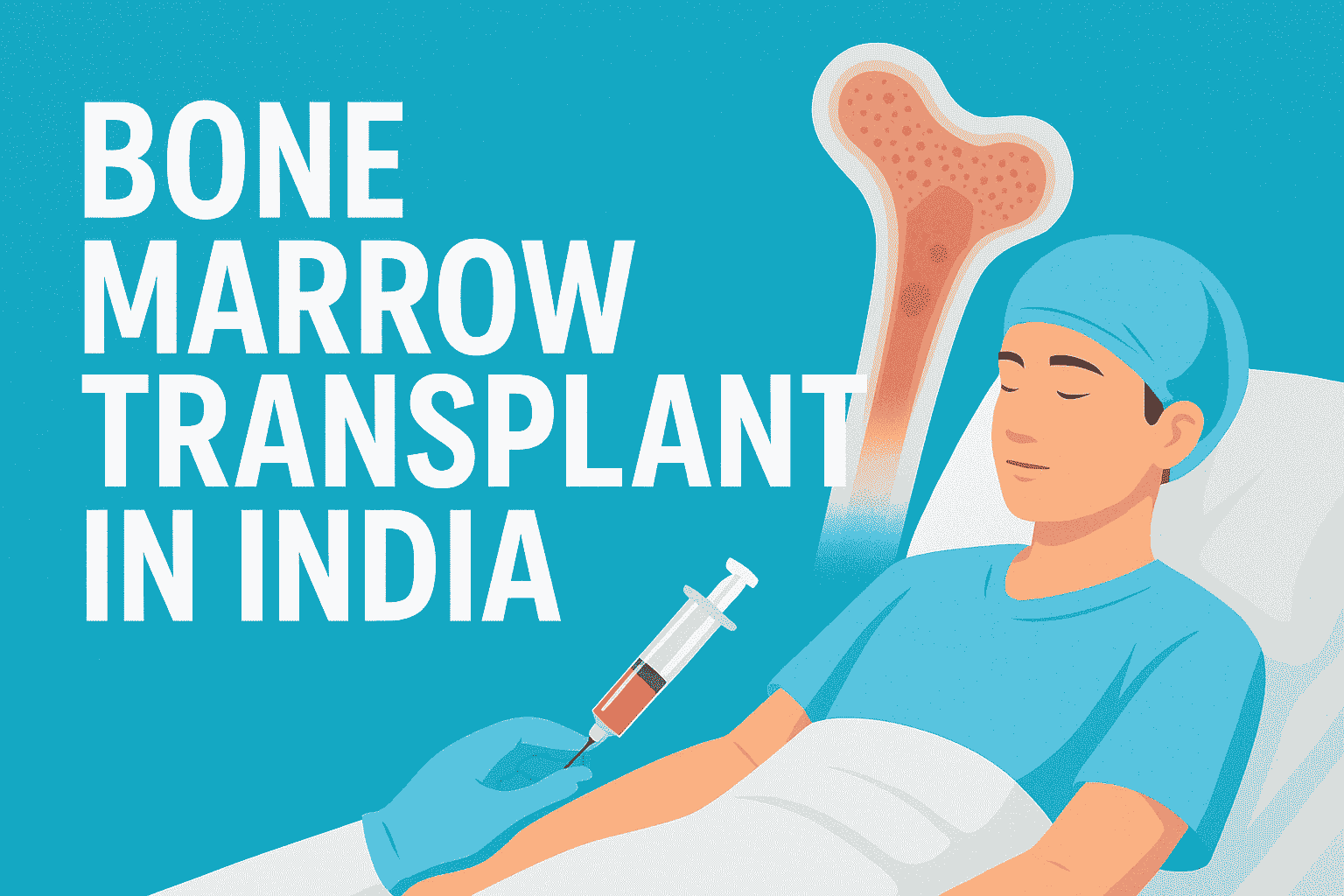
If you’re researching bone marrow transplant in India, you’ve come to the right place. Whether you are considering treatment for yourself or a loved one, understanding the procedure, treatment centres, costs and recovery can help you make an informed decision. In this article we’ll cover everything from the procedure itself (including types such as autologous and allogeneic) to the cost of bone marrow transplant surgery in India, top hospitals, and how organisations like Innayat Medical can help international patients through the process.
What is a Bone Marrow Transplant Procedure?
A bone marrow transplant (BMT) involves replacing diseased or damaged bone marrow with healthy stem cells or marrow. The marrow is the soft, spongy tissue at the core of bones and it produces blood cells (red cells, white cells, platelets). When the bone marrow is failing — due to disease, heavy chemotherapy, radiation or congenital disorders — a transplant can restore healthy blood-cell production.
How the procedure works
1. Evaluation & preparation: Before transplant, many tests are done (blood counts, organ tests, HLA-matching, donor search, etc.).
2. Conditioning: The patient may receive high-dose chemotherapy and/or radiation to destroy diseased marrow and suppress immune response.
3. Stem cell infusion / transplant: Healthy stem cells or marrow from a donor (or the patient’s own previously harvested cells) are infused intravenously.
4. Engraftment & recovery: The new stem cells must engraft (take root and begin producing blood cells). The patient remains under close monitoring for infection, graft-versus-host disease (in donor cases), and other complications.
5. Long-term follow-up: Recovery time can be lengthy; follow-up, immunosuppressive drugs and monitoring are key.
This is your “bone marrow transplant procedure” — one of the core terms in this topic.
Types of Bone Marrow Transplant (Autologous & Allogeneic)
Understanding the difference between transplant types is important in assessing both eligibility and cost. Here are key types:
• Autologous transplant: The patient’s own stem cells or bone marrow are harvested, stored, and reinfused after intensive therapy. Because the donor is the same person, compatibility and rejection issues are minimal.
• Allogeneic transplant: Stem cells or marrow are donated from another person (a sibling, matched donor or less-matched donor). This type carries additional complexity (HLA matching, graft-versus-host disease risk, donor logistics).
• Haplo-identical / mismatched donor transplant: A variation of allogeneic where a partially matched donor is used (e.g., half-matched family member). This tends to cost more and have higher risks but is increasingly used when ideal donors are unavailable.
In India, many centres are experienced in both autologous and allogeneic transplants, including haplo-identical cases. The choice affects cost, procedure complexity and recovery.
Why Choose India for Bone Marrow Transplant?
India has emerged as a strong destination for bone marrow transplant for various reasons:
• Many hospitals in India hold international accreditations (such as …) and are equipped with advanced infrastructure.
• There is a pool of experienced hematologists, transplant specialists and multidisciplinary teams.
• Treatment cost is significantly lower than in many Western countries, making it more accessible for many patients and international medical travellers.
• Medical-tourism companies like Innayat Medical provide end-to-end support (hospital selection, visa, accommodation, post-treatment follow-up) so the journey is smoother for international patients.
So if you’re looking for “bone marrow transplant in India” — it’s a viable option, provided you select the right hospital.
Cost of Bone Marrow Transplant in India
One of the key questions many patients ask is: How much does bone marrow transplant cost in India? Below we summarise the range, what influences cost and how to interpret the numbers.
Cost ranges
• According to one source, the cost for a bone marrow transplant (for example in Delhi/NCR) ranges from ₹15 lakh to ₹40 lakh (Indian Rupees) for typical cases.
• For allogeneic transplants with donor involvement the cost may start around ₹25 lakh and go up to ₹35 lakh or more.
• Converted into USD, many sources report autologous transplants starting around US$14,000-20,000 and allogeneic US$22,000-35,000 depending on complexity and hospital.
• An older study found the median cost for autologous at ~US$12,500 and allogeneic ~US$17,914 in India.
What influences cost?
Key factors that influence the cost of bone marrow transplant treatment in India include:
• Type of transplant (autologous is less expensive than allogeneic).
• Donor matching and donor logistics.
• Hospital location, reputation, bed category (private vs multi-specialty vs super specialty).
• Pre-transplant procedures, conditioning regimen (chemo, radiation).
• Post-transplant care, complications (infections, graft-versus-host disease), length of stay.
• Medications (immunosuppressants, supportive care), readmissions.
• International patient ancillary costs: accommodation, travel, visa, follow-up.
What should you budget for?
If you are considering bone marrow transplant treatment in India, it is prudent to plan for the higher end of the cost range to accommodate complications or longer stays. For example:
• Budget at least ₹20 lakh (or more) for a standard allogeneic transplant.
• Include other costs: travel, accommodation, post-treatment follow-up.
• Ensure your hospital / consultant clearly outlines what’s included in the quote hospital stay, ICU, medications, donor fees.
Choosing a Hospital for Bone Marrow Transplant in India
Given the complexity of bone marrow transplants, selecting a top hospital is crucial. When you search for “hospital for bone marrow transplant in India” or “best hospital for bone marrow transplant in India”, here are some factors to look for:
Key criteria
• Dedicated BMT / hematology-oncology department with experienced transplant team.
• Proven success rates for transplants (engraftment, survival, complication management).
• Accreditation (e.g., NABH, JCI) and advanced infrastructure (ICUs, HEPA-filtered rooms, stem cell labs).
• Donor registry / haplo-match capabilities thus catering for allogeneic scenarios.
• Counseling, follow-up care and support for international patients.
• Transparent cost estimates and packages.
Role of Innayat Medical
Innayat Medical states that they work with “top-tier hospitals” across India, specifically catering to international patients and helping them find tailored treatment plans in centres across Delhi, Gurgaon, Bangalore, Chennai, etc.
So if you are looking for a reliable facilitator, they can help identify the right hospital, manage logistics and simplify the accession process.
Hospital cities to consider
Cities with strong BMT programs include Delhi/NCR (Gurgaon, Noida), Mumbai, Bangalore, Chennai.
Success Rate & Recovery Time
Success rate
A frequent concern is: what is the success rate of bone marrow transplant in India?
• One source indicates the success rate for allogeneic transplant in India is about 81%.
• Another notes that success and outcomes in India are comparable to many developed countries, especially when donor match is good and complication risk is managed.
Recovery time
• Post-transplant recovery involves hospitalisation (often several weeks) and then extended monitoring. According to Practo, typical hospital stay may be “a few weeks to be discharged” then follow-up visits for about 3 months or more.
• Recovery time varies depending on: whether it was autologous vs allogeneic, presence of complications (like graft-versus-host disease), donor match quality, overall health of patient.
• Many patients may stay in India for a few weeks (hospital stay) and another few weeks for follow-up and monitoring (especially international patients).
International Patients & Medical Tourism
For patients travelling from abroad, India presents an attractive destination for bone marrow transplant: high quality, lower cost, experienced centres. Using a facilitator like Innayat Medical means you get help with:
• Hospital choice & treatment plan coordination.
• Visa support, accommodation, travel logistics.
• Post-treatment coordination and teleconsultation follow-up.
• Transparent cost packages and constant updates/case management: “We keep you up-to-date throughout your medical journey regular updates and documentation through our patient case management.
When traveling for BMT, make sure to ask:
• Does the package include donor search fees (if allogeneic)?
• Is pre-transplant admission, conditioning chemotherapy included?
• What is included for complications / extended stay?
• How is post-transplant monitoring arranged (especially once you return to your home country)?
• How much extra you’ll need to budget (stay for companion, travel, visa, hotel, food) beyond the hospital cost.
Why Cost Differences Occur and What to Ask
When you compare cost quotes, you may see quite a range. Here are reasons why:
• Autologous vs allogeneic: Allogeneic involves donor matching, donor stem cell collection & higher risk of complications.
• Donor type: Sibling donor is less complex than unrelated donor via registry; haplo-identical donor further adds complexity.
• Hospital class & location: Big metro Delhi/Mumbai hospitals may charge more for premium services, room type, ICU etc.
• Complications: If patient has comorbidities or develops graft-versus-host disease or infection, cost increases significantly.
• Duration of stay: Longer stay = higher cost.
• Logistics for international patients: accommodation, travel, companion costs.
• What is included in your package: ensure things like donor search, donor stem cell harvest cost, ICU days, medications are clearly spelled out.
Best Practices & Tips for Patients Considering BMT in India
Here are practical tips to ensure smoother process and better outcomes:
• Choose your hospital carefully: Visit (virtually or in person) the transplant unit, check accreditation and ask for success/engraftment statistics.
• Check donor match early: For allogeneic transplants, donor availability is key — a sibling match or registry search should be started early.
• Read the fine-print of cost quotes: Understand what is included vs excluded (drugs, complications, ICU, donor registry, accommodation).
• Plan for companion and accommodation: International patients often stay in India with a companion; budget extra for hotel/food.
• Post-transplant care matters: Engraftment and recovery require ongoing monitoring — check how the hospital will support follow-up (especially if traveling back).
• Understand recovery time & expectations: Bone marrow transplant is a major procedure — recovery is not just hospital discharge but months of follow-up, infection precautions, lifestyle adjustments.
• Coordinate with your home physician: Once you return after transplant, ensure there is good communication with your local hematologist/oncologist for ongoing care.
• Ask about infection control & isolation: Transplant units must have strict protocols (HEPA filters, isolation rooms) since patient is highly vulnerable.
• Travel timing & visa: If you are an international patient, ensure your visa allows for stay beyond hospitalisation, for follow-up and potential readmission.
• Consider emotional & logistical support: This is a stressful journey – having mental/emotional support, clear communication with hospital team and contingency funds is important.
Why Use Innayat Medical for Your Journey?
If you are exploring “bone marrow transplant in India”, working with a facilitator such as Innayat Medical can add value:
• They offer end-to-end medical tourism services: From hospital selection, cost-estimate, travel & accommodation coordination, to follow-up and post-treatment assistance.
• They have a wide network of hospitals (400+ across India) and help you access international-quality care at more affordable cost.
• Their model emphasises transparent pricing, value-added services and patient-centric support — which is particularly helpful when you are travelling abroad for complex treatment like bone marrow transplant.
If you are interested, you can reach out to them via their website to get a free quote for your case.
Conclusion
A bone marrow transplant in India offers patients access to world-class medical care, experienced specialists, and advanced technology — all at a fraction of the cost compared to many Western countries. Whether you need an autologous or allogeneic transplant, India’s leading hospitals provide comprehensive care, from diagnosis and donor matching to recovery and follow-up.
However, the success of the treatment depends largely on choosing the right hospital, understanding the procedure, and planning your recovery journey carefully. For international patients, navigating these details can be complex — and that’s where trusted facilitators like Innayat Medical make a real difference. They connect you with top hospitals, provide transparent cost estimates, assist with travel and accommodation, and ensure a smooth, stress-free experience throughout your medical journey.
For additional support services including accommodation, travel assistance and logistics that complement your medical journey, you may also explore MobilitySolution for professional guidance.
